The Profound and Complex Poison Tree Tattoo Meaning: A Guide to Wrath, Growth, and Hidden Truths
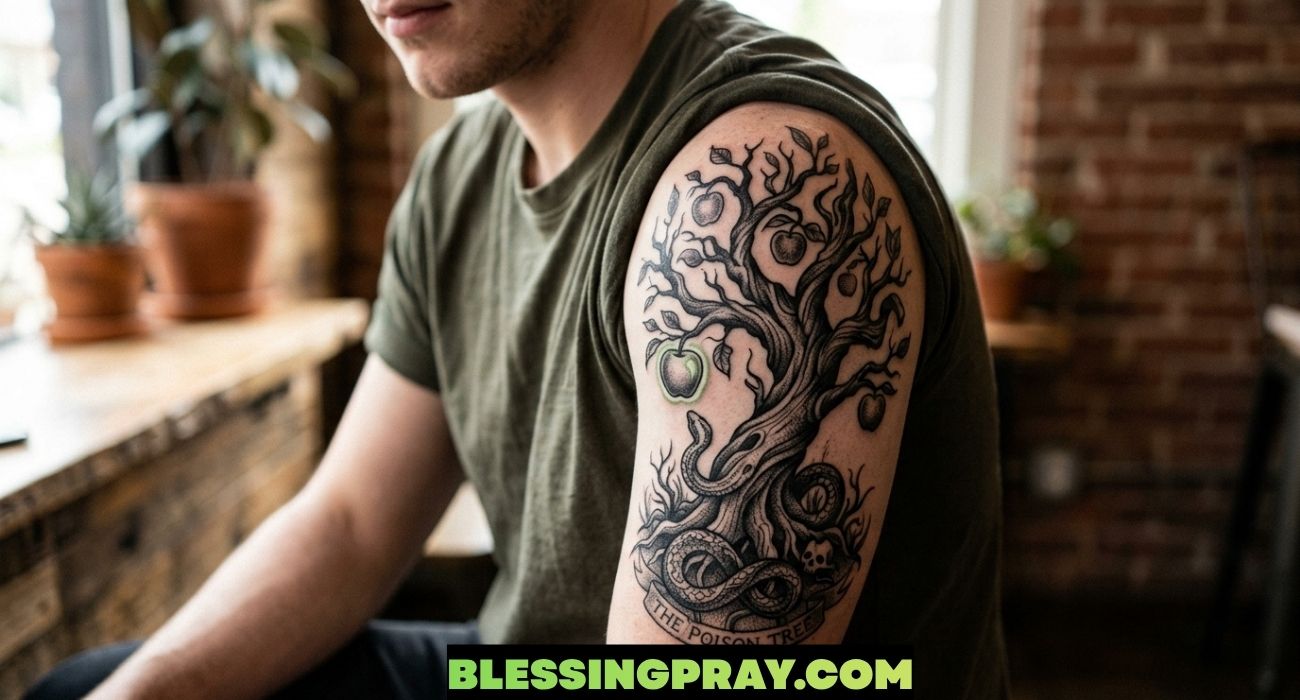
A Poison Tree Tattoo Meaning represents hidden emotions, personal struggles, pain, growth, and transformation. It is inspired by the idea of a tree carrying deep thoughts and feelings. This tattoo often shows the balance between darkness and inner strength.
Have you ever wondered what a poison tree tattoo truly symbolizes? Its unique design attracts people who connect with mystery and deep meanings. This tattoo can tell a powerful story without using words.
The Poison Tree Tattoo Meaning can reflect betrayal, healing, protection, or personal change. Many people choose this tattoo to represent life experiences and lessons. Its artistic style makes it a meaningful and personal choice.
What Does a Poison Tree Tattoo Meaning Represent?
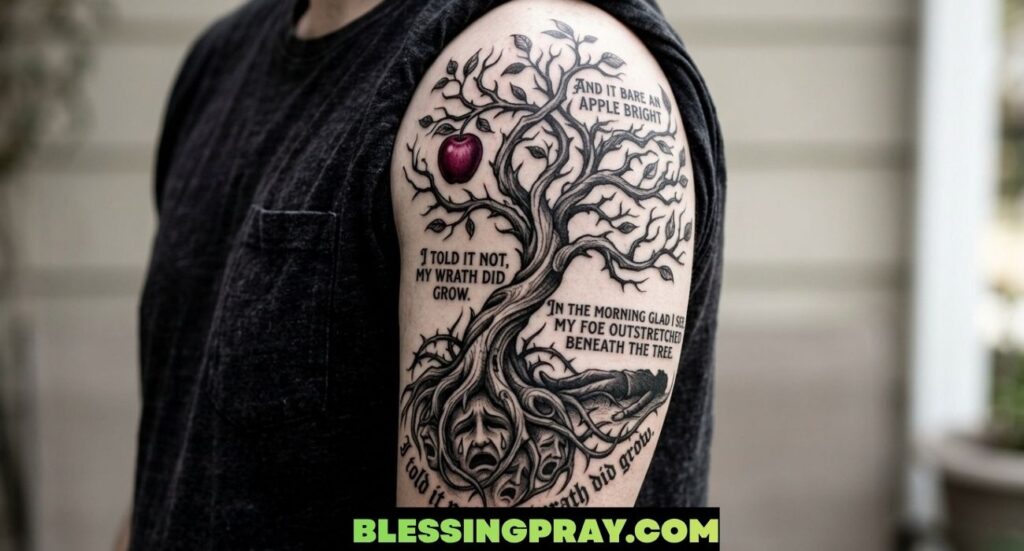
At its core, a poison tree tattoo meaning revolves around the dangerous fruits of suppressed fury, deceit, and unresolved emotional wounds that we water in secret. It is a visual confession of how a seemingly beautiful exterior can conceal a toxic, destructive core that poisons both the bearer and those who draw near.
- A visual metaphor for the slow, corrosive destruction caused by nursing a grudge in silence.
- The deceptive duality of a person who smiles at a friend while inwardly cultivating hatred.
- A cautionary emblem about the spiritual self-poisoning that occurs when you refuse to forgive.
- The inevitable karmic harvest from seeds of bitterness planted in one’s own heart.
- A symbol of personal boundaries, warding off those who would consume your energy.
- The quiet power that grows from channeling rage into a controlled, silent force.
- An admission of one’s own shadow self and the capacity for malice hidden beneath the surface.
- The growth of a lie, starting small and spreading its roots into every aspect of life.
- A memorial to a relationship that was systematically poisoned by unspoken resentments.
- The intellectual and emotional seduction of a vengeful fantasy as it takes physical form.
- A representation of forbidden knowledge or temptation that appears alluring but yields suffering.
- The silent battle of passive aggression, where a smile becomes a weapon.
- A permanent reminder that wrath, left unchecked, becomes a beautiful monster.
The Origin of Poison Tree Symbolism
The poison tree as a contemporary symbol doesn’t stem from botany alone but from a potent fusion of literature, art, and ancient mythology. Understanding its roots gives the tattoo profound narrative depth, transforming it from a simple image into a conversation with centuries-old wisdom about the human condition.
- The Garden of Eden’s Tree of Knowledge, the original archetype of forbidden fruit and deceptive promise.
- The manchineel tree of the Americas, known as “the tree of death,” whose sap and fruit are dangerously toxic.
- Buddhist teachings on the three poisons—greed, hatred, and ignorance—as the roots of suffering.
- Norse mythology’s depiction of Yggdrasil as a world tree with gnawing serpents, symbolizing systemic decay.
- Alchemical engravings of trees bearing spiritual or literal poison as symbols of the prima materia’s dark phase.
- Yew trees in Celtic lore, guardians of the underworld whose every part is toxic and associated with death.
- Japanese folklore’s Jigokudayu, a demoness who appears beautiful and offers fruit that is pure poison.
- Greek mythology’s upas tree, whose deadly shade was said to kill any creature resting beneath it.
- The biblical “root of bitterness” in Hebrews, a warning against a poisonous spiritual weed defiling many.
- Medieval bestiaries that described the Peridexion tree, whose shadow repelled evil dragons but attracted them to its fruit.
- African folk stories of the ordeal tree, whose bark was used to test guilt and provide justice.
- Hindu mythology’s Kalpavriksha, a wish-fulfilling tree that can become a source of venom when misused by the wicked.
- The philosophical concept of the “Tree of the Knowledge of Good and Evil” as the birthplace of human duality.
How Literature Shaped Poison Tree Tattoo Meaning
Literature, most famously William Blake’s poem, transformed the abstract idea of secret anger into a concrete, lethal botanical entity. These narratives gave us the visual language for a tree that thrives not on water and sun, but on tears, fears, and deceitful smiles, etching the metaphor deeply into our cultural psyche.
- William Blake’s “A Poison Tree,” the seminal text illustrating wrath nurtured by fear and deceitful friendship.
- Shakespeare’s motif of hidden poison, such as Claudius pouring hebenon into the sleeping king’s ear in Hamlet.
- The hunger-inducing, soul-poisoning Turkish Delight in C.S. Lewis’s The Lion, the Witch and the Wardrobe.
- Nathaniel Hawthorne’s “Rappaccini’s Daughter,” where a girl becomes a living poison tree, tragically isolated by her father’s science.
- The toxic, whispering influence of the serpent in Eden’s tree, as poetically expanded in John Milton’s Paradise Lost.
- Dante Alighieri’s Divine Comedy, where the Wood of the Suicides transforms those who harmed themselves into gnarled, bleeding trees.
- George Orwell’s metaphor of the thought-police as a root system that poisons the mind’s private landscape.
- The Grimm Brothers’ tales of poisoned apples, symbolizing a beautiful facade that delivers a sleeping death.
- Sylvia Plath’s poems using botanical imagery to explore a poison of the mind that grows like ivy, suffocating the self.
- J.R.R. Tolkien’s Old Man Willow, a sentient, malevolent tree that consumes those who rest beneath it.
- The novella The Poison Tree by Bankim Chandra Chatterjee, linking the idea to a family and society’s structural decay.
- Agatha Christie’s use of toxics in domestic gardens, where cultivated beauty becomes the weapon of choice.
- Blake’s direct line, “I told my wrath, my wrath did end,” a healing counter-mantra to the poison tree’s entire philosophy.
Deep Symbolism Behind Poison Tree Tattoos
Delving deeper into a poison tree tattoo meaning reveals layers of existential and personal symbolism far beyond simple anger. It represents a complex internal ecosystem where pain is transmuted into a self-protective, yet ultimately self-destructive, monument of isolation, strength, and silent suffering.
- The deliberate self-sabotage of watering negative thoughts until they grow into an unmanageable forest of despair.
- A monument to emotional invalidation, where your true feelings were not allowed to see sunlight and twisted inward.
- The seductive beauty of melancholy, finding a dark aesthetic comfort in one’s own sadness and pain.
- A barrier of toxic thorns grown as a defense mechanism after profound betrayal and trauma.
- The concept of radical honesty, a pledge to speak one’s wrath before it takes root and blooms secretly.
- The shadow’s garden, a representation of the Jungian dark self that must be acknowledged, not ignored.
- The invisible labor of processing another person’s emotional poison without becoming toxic in return.
- An emblem of a generational curse or family secret that casts a long, poisonous shadow over descendants.
- The idea of forgiveness as the axe, the only tool capable of felling a mighty, poison-laden trunk.
- A symbol of the sacred wound, the belief that your deepest pain has been alchemized into your greatest source of wisdom.
- The fear of intimacy, that letting anyone close means exposing them to, or being exposed by, one’s inner venom.
- The silent scream of passive aggression made physical, a permanent mark of a non-verbal war.
- A recognition that the poison which destroys others first consumes its own vessel, a form of slow self-immolation.
Psychological and Emotional Meaning of a Poison Tree Tattoo
From a psychological lens, this tattoo is a profound map of the cognitive and emotional response to unprocessed injury. It visualizes the internal workings of rumination, the anatomy of a grudge, and the heavy psychic cost of wearing a mask of calm while a storm of fury rages silently within the soul’s architecture.
- A physical manifestation of cognitive dissonance, holding two opposing realities of love and hate in a single mind.
- The Freudian conflict between the id’s raw rage, the ego’s polite smile, and the superego’s critical judgment.
- An external symbol for alexithymia, the deep difficulty in identifying and verbally expressing one’s own turbulent emotions.
- The concept of emotional labor, the exhaustion from performing tranquility while suppressing a violent internal tempest.
- A memorial to the inner child who learned that anger was dangerous and so became a silent, festering caretaker of peace.
- The psychological construct of a false self, where the poison tree is the authentic, rejected self that grows in the dark.
- A personification of rumination, the habit of repetitively going over an injury, watering the seed of grievance daily.
- The visualization of projection, seeing one’s own unacknowledged venom as belonging to everyone else.
- The scar of complex PTSD, where a body and mind are hyper-perceptive to threats, living in a constant state of poisonous readiness.
- The mental trap of splitting, seeing people as all-good or all-bad, where the tree’s fruit represents the all-bad projection.
- A symbol of radical acceptance of one’s capacity for malevolence, to own and disarm it rather than deny its existence.
- The neurological loop of a grudge, how the brain’s reward center is tickled by fantasies of revenge, a sweet poison.
- A signpost of the healing moment when one finally “tells their wrath,” ending its secret, silent reign over the psyche.
What Your Poison Tree Tattoo Says About You
Your choice to wear this complex symbol suggests you are a person who refuses to live on the surface of things, who has stared into your own abyss. It telegraphs a deep introspective nature, a history of navigating painful inner landscapes, and a commitment to owning the full, unfiltered truth of your emotional existence.
- You are a survivor who has alchemized a season of profound betrayal into a permanent, personal philosophy of vigilance.
- You possess a low tolerance for superficiality and feel compelled to find beauty, and even humor, in life’s darker truths.
- You are intensely self-aware and refuse to pretend you are immune to the corrosive, primitive force of deep-seated anger.
- You value emotional accountability and use the symbol as a daily, private check-in on your own festering resentments.
- You are a secret-keeper, and this image represents the immense, often toxic, weight of holding unspoken truths for others.
- You are a literary or philosophical soul, drawn to concepts that can be held and examined from multiple angles of meaning.
- You have a rebellious, non-conformist approach to beauty, finding traditional floral designs far too simple for your inner world.
- You are in active recovery from people-pleasing, and the tattoo is your declaration that your niceness has a sharp, definite edge.
- You are someone who has been massively misunderstood and feel a kinship with things wrongly classified as purely evil.
- You are a protector, using the image of poison not as a threat but as a clear warning for others to respect your boundaries.
- You have fully integrated your shadow self, no longer at war with your anger but carrying it as a simple, neutral fact.
- You are a visual philosopher, using your own skin as the manuscript for the most important lessons your life has taught you.
- You believe in the sanctity of your own growth, even if it grew from soil that others intentionally poisoned.
Spiritual and Biblical Meaning of Poison Tree Tattoos
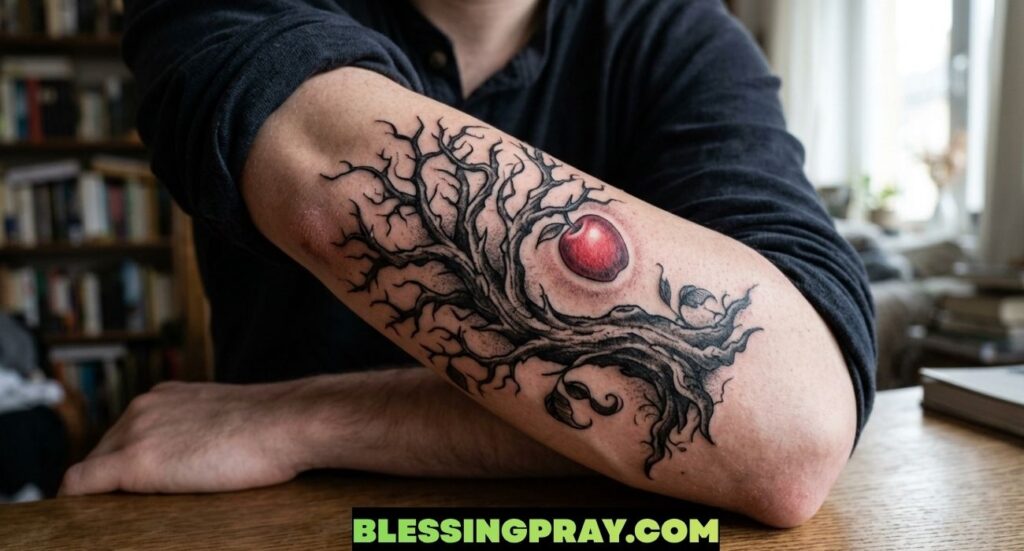
In a spiritual context, the poison tree is a stark biblical warning made flesh, a modern-day memento mori for the soul. It connects the Old Testament “root of bitterness” to the New Testament’s call for forgiveness, framing unmanaged wrath not just as an emotion, but as a spiritual poison that defiles the temple of the self and the community.
- The “root of bitterness” from Hebrews 12:15, a direct scriptural warning against a toxic spiritual plant defiling many.
- The Genesis Tree of Knowledge, representing humanity’s first disobedience and the origin of mortal shame and suffering.
- A lesson from Matthew 18:21-35, the Parable of the Unforgiving Servant, who had his debt canceled but poisoned his own freedom.
- The fruit of the Spirit from Galatians 5, where the poison tree represents the opposite harvest of the sinful nature.
- The concept of the two trees in the Garden of Eden, a choice between life and the poisonous knowledge of good and evil.
- A Zen Buddhist koan of the self, where the tree is an illusion grown from the poisonous attachment to a perceived attack.
- The Hindu and yogic concept of samskaras, the mental impressions left by trauma that grow into poisonous patterns.
- A symbol of spiritual warfare described in Ephesians 6, representing a fiery dart of the enemy that has been allowed to fester.
- The wisdom of Proverbs 14:30, “A heart at peace gives life to the body, but envy rots the bones,” as a poison tree’s physical reality.
- The karmic law of cause and effect, where a seed of violent intention can only ever yield a harvest of suffering.
- A personal icon of the sacrament of confession, the need to speak sins and resentments aloud to drain their venom.
- The death-and-rebirth cycle of a shamanic journey, where one must be poisoned to gain immunity to spiritual sickness.
- The Sufi teaching that your deepest wound is the crack where the light enters, and the tree grows from that specific illuminated fissure.
See Also : 1060+ Heart Touching Birthday Wishes for Baby Girl That Will Mel
Poison Tree Tattoo Meaning in Different Cultures
Cultural interpretations turn the poison tree tattoo into a global lexicon of hidden danger and sacred boundary. From the actual “death tree” of the Caribbean to the mythical iron-eating serpents of Norse legend, each tradition gives this symbol a unique regional flavor, reflecting a universal human awareness of nature’s beautiful but deadly deceptions.
- Caribbean (Manchineel Tree): A literal, scientific warning, the “arbol de la muerte” whose touching of sap, fruit, or shade can be fatal.
- Norse (Nidhogg & Yggdrasil): A cosmic serpent that venomously gnaws at the root of the world tree, symbolizing a force that poisons all of creation.
- Japanese (Jigokudayu): The beautiful demoness motif, a cultural reflection on the deceptive nature of desire and the poison of illusion.
- Islamic Folklore (Zaqqum): A tree in the depths of hell yielding fruit like devil’s heads, a direct representation of eternal torment and spiritual poison.
- Hindu (Halahala): The lethal poison that emerged from the cosmic ocean, held in Shiva’s throat, signifying the world’s toxic essence that must be contained.
- Native American (Manzanilla de la Muerte): Respectful lore around the Manchineel, teaching not to trust all that appears welcoming in nature.
- British/Western (Blakean): The intellectual, psychological poison of the industrial and polite society, where suppressed anger is the true social disease.
- Chinese (Jianmu): A mythical tree some traditions place near the center of the world, a conduit that could be poisoned by earthly corruption.
- Celtic (Yew Tree): The sacred tree of death and rebirth found in graveyards, its poison representing the veil between this world and the Otherworld.
- West African (Calabar Bean): The “ordeal bean,” a judicial poison tree whose seed determined guilt or innocence by its lethal effect.
- South American (Curare Vine): Although a vine, its integration into the “poison arrow” mythos ties to a hunting and warfare tree of lethal knowledge.
- Slavic (Baba Yaga’s Forest): A forest itself as a sentient, trickster entity, where certain trees feed on the lost and the fearful.
- Buddhist (The Three Poisons Tree): A central icon depicting a pig, snake, and rooster circling its center, the very roots of suffering from which all karma blooms.
Popular Poison Tree Tattoo Designs and Their Meanings
The artistic expression of a poison tree tattoo meaning ranges from hauntingly detailed realism to stark, symbolic line art. Each design choice—from a single poisoned apple to a full, gnarled landscape—shifts the narrative focus, allowing the wearer to emphasize the seduction, the danger, the decay, or the grim beauty of their personal story of hidden wrath.
- A gnarled, leafless tree with skulls as its fruit, directly symbolizing relationships or parts of self killed by bitterness.
- A beautiful woman’s face intertwined with roots and toxic blooms, a self-portrait as a modern-day Rappaccini’s daughter.
- A vivid, realistic hand holding a single, glamorous poisoned apple, focusing on the moment of seductive, deceptive offering.
- Two figures, one weeping and one with a hidden knife, their intertwined tears and water feeding the roots of the tree.
- A tree with one half in full, glorious bloom and the other a dead, thorny skeleton, representing a split soul or relationship.
- A botanical study-style illustration of the Manchineel tree, labeled with its deadly Latin taxonomy for a scientific feel.
- A simple, minimalist Blakean line drawing of a figure secretly watering a small, sinister sapling under a crescent moon.
- A cross-section of the earth showing a smiling face above ground and a monstrous, thorny root system strangling a heart below.
- A dagger piercing a heart, from which a poison tree grows instead of blood flowing, a direct emblem of a specific betrayal.
- A tree whose dripping sap forms the words “In the morning glad I see; My foe outstretched beneath the tree” in a delicate script.
- A poison dart frog or serpent coiled at the base of a vibrant, deceptively innocent-looking tree, emphasizing hidden threat.
- A burning poison tree, symbolizing the active catharsis and difficult, fiery work of finally eradicating a long-held grudge.
- An abstract geometric tree, with the fractals and nodes representing the systematic and logical way a lie poisons a whole network.
Color Symbolism in Poison Tree Tattoos
Color choice is far from mere decoration; it is the primary language of the tattoo’s emotional and poisonous intent. The palette dictates whether the poison is one of sorrow, growth, luxury, or stark warning, allowing a single design to whisper a secret grief in grey or scream a dangerous seduction in vibrant, venomous green.
- A palette of muted grays and deep blacks, signifying emotional decay, the ash of a burned-out fury, and clinical depression.
- Ethereal watercolor washes of violet and purple, representing a spiritualized pain, mystery, and the transmutation of trauma.
- Sickly, acidic greens and sulfurous yellows, the direct chromatic language of venom, sickness, and bile-like envy.
- Deep, romantic reds and blood-crimsons, focusing on the heart’s passion that curdled into wrath and the cost of a visceral wound.
- Sepia-toned browns and parchment tints, giving the piece a vintage literary feel, an homage to old books and ancient warnings.
- Stark, illustrative blackwork, emphasizing the unforgiving, binary nature of a grudge and the harsh truth of the concept.
- Bio-luminescent and UV-reactive blues and greens, suggesting a toxic, otherworldly, and almost radioactive emotional reality.
- Jewelled tones of emerald and sapphire, framing the poison as a form of dark royalty, preciousness, and seductive power.
- White ink on pale skin, a subtle, scar-like rendering of a secret poison, almost invisible but deeply felt.
- A single, bold pop of red on a black-grey tree for a poisoned apple, isolating the focal point of the tempting danger.
- Ochre, rust, and orange as the colors of a late autumn decay, the season where the poison tree’s fruits finally fall.
- Pink and magenta in a new-school style, using an ironically “cute” palette to deliver a grotesque and unsettling psychological message.
- Cosmic purples and blacks with tiny stars, framing the poison as a dark, internal galaxy, an entire universe of quiet pain.
Best Placement Ideas for Poison Tree Tattoos
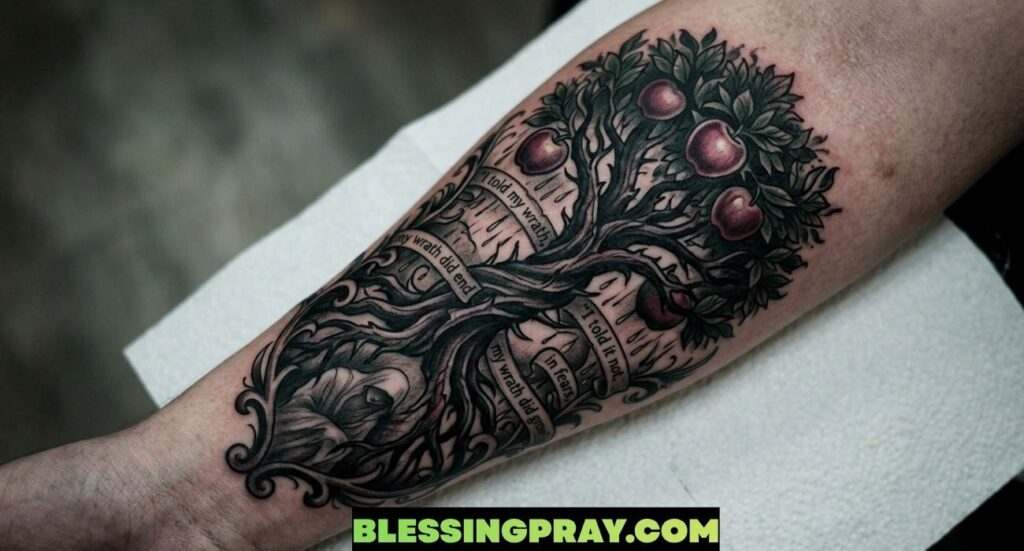
The placement of a poison tree tattoo should map directly to the source and expression of the meaning it carries. A design rooted in personal heartbreak finds a home on the chest, while a warning against external deception fits the forearm, making the body’s geography an essential narrative tool.
- Over the sternum or heart, the epicenter of emotional hurt, allowing roots to literally grow from the heart’s core.
- A vertical, full-length spine piece, representing the backbone of a personal philosophy and the body’s central neural poison pathway.
- The inner forearm, a clear and intentional warning to others, placed where you extend a handshake or offering.
- A vertical design on the ribs, a highly personal and guarded location for a deeply private secret or hidden vulnerability.
- The thigh, providing a larger, flatter canvas for an intricate botanical plate, a poison hidden beneath one’s clothing.
- The back of the hand or fingers, a highly visible and edgy placement for a single small poison apple or dripping sap.
- A sleeve, allowing a full narrative from roots (at the wrist, past trauma) to the branches (at the shoulder, current mindset).
- The neck or behind the ear, a provocative whisper, a deadly secret constantly half-hidden and half-revealed to the world.
- The calf, symbolizing a guarded journey forward, where the poison tree walks with you as a permanent but managed past.
- Down the Achilles heel, a deeply vulnerable spot for a symbol of a fatal flaw or the specific source of one’s undoing.
- Drape over the shoulder and down the bicep, a gargoyle-like guardian made of botany, protecting the body from further harm.
- On the palm, a profoundly ironic placement for a poison fruit, representing what you choose to hold, give, or clench in secret.
- A pelvic placement, framing a poison that is connected to primal energy, sexual betrayal, or the root of creative blocks.
See Also : 750+ Beautiful Good Evening Quotes to End Your Day with Positivity
Poison Tree Tattoo Meaning for Men and Women
While the psychological core of the poison tree is universal, cultural narratives often flavor its expression differently for men and women. A man’s design might lean into the stoic suppression of rage, while a woman’s piece can subvert the “nurturing nature” stereotype, yet both fundamentally speak to the same human experience of hidden, growing pain.
- For men, a blackwork, aggressive root system on the chest, visualizing the societal pressure to bury fury until it becomes a silent, internal monster.
- For women, an elegant, fine-line floral with poisonous berries, reclaiming the narrative of a “beautiful nurturer” who can also be inherently dangerous.
- A gender-neutral botanical skull, where a ram or deer skull sits at the tree’s base, a memento mori marking the death of a former, innocent self.
- For men, a Nordic-style Yggdrasil being gnawed by serpents, a hyper-masculine symbol of a man fighting the forces that seek to poison his world.
- For women, a delicate, Victorian-style mourning brooch tattoo, featuring a weeping willow, a lock of hair, and the text “to my foe.”
- A geometric, divine-feminine mandala that subtly spoils into a poison tree, for a woman whose gentleness became her weapon.
- For men, a traditional American-style dagger-through-a-heart, but with a Manchineel tree growing from the wound instead of blood.
- For women, a watercolor splash that flows from a cracked, beautiful vase, where the spilled water grows a single toxic bloom.
- A pride-themed poison tree, for an LGBTQ+ person whose family’s “love” was a secret, poison-laced condemnation of their identity.
- For men, a subtle, single-line art piece on the ribs, a reminder that his stoic silence is poisoning his intimate relationships.
- For women, a Cyndi Lauper or modern witch-inspired design, where the poison tree is a spell component for warding off enemies.
- A realistic heart wrapped in a beautiful flowering vine, where the gender-neutral message is a universal cardiac poison of a broken love.
- For any gender, a parent-child motif, with a larger tree’s poisoned roots entangling a smaller, dying sapling, symbolizing generational trauma.
Why People Choose a Poison Tree Tattoo
The motivation to permanently ink a poison tree is rarely impulsive; it’s a deeply considered, often cathartic decision. People are drawn to this symbol as an act of reclamation, a therapeutic confession, or an intellectual alignment, turning a period of intense inner darkness into a permanent, meaningful, and beautiful source of personal strength.
- To externalize and ritually release a secret grudge they’ve been silently watering for years, finally looking it in the eye.
- As a permanent literary tribute to William Blake’s poem, wearing their deep connection to literature and emotional truth.
- To claim ownership of a “toxic” label an abuser gave them, subverting its power through a deliberate, artful choice.
- As a highly visual, daily reminder for themselves to practice radical forgiveness and prevent future roots of bitterness.
- To commemorate surviving a relationship or environment where emotional honesty was forbidden and lethal.
- An emblem for a therapist, social worker, or psychologist who professionally transmutes others’ poison without being consumed.
- For an environmentalist or botanist who works with actual poisonous plants and appreciates their ecological role.
- A choice of aesthetic rebellion, rejecting the pressure for body art to be only soft, inspirational, or conventionally beautiful.
- A symbol of a major life pivot, where they had to cut down a “poison tree” (a job, a marriage, a belief) to save themselves.
- As a declaration of “danger” to ward off energy vampires and manipulative people who feed on kindness.
- An intimate, symbolic code with a close friend or partner, representing a shared secret or a mutually weathered toxic event.
- To honor a melancholic personality type, making a home in the minor-key, introspective side of existence without shame.
- A self-portrait in flora, a simple acknowledgment that they, like all humans, are a mix of healing fruit and harmful venom.
How to Choose the Right Poison Tree Tattoo Design
Selecting your design is a process of reverse-engineering your own psyche and aesthetic. The “right” poison tree tattoo isn’t just a picture you like; it’s a piece that resonates with the specific species of your experience, fits the chosen body geography, and will continue to speak a complex, evolving truth to you for a lifetime.
- First, identify your “poison”—was it a romantic betrayal, a familial secret, self-hatred, or a societal wound? Let this guide the imagery.
- Choose your specific tree species: a sweet, deceptive apple for Blakean wrath, or a gnarled Manchineel for a tangible, worldly threat.
- Decide if your focus is the healing or the hurt: a living, green tree represents ongoing pain, a dead or burning one represents catharsis.
- Ask your artist to design a “root system” that uniquely fits and flows with the specific muscles and bones of your chosen placement.
- Incorporate a tiny antidote in the design, like a single blooming flower or a small axe, to bake hope directly into the meaning.
- Have a secret. Hide a word, a date, or initials in the bark’s texture, making the piece a private riddle only you can read.
- Use the exact ink style to mirror your emotional state: chaotic watercolor for messy grief, precise etching for a cold, analyzed grudge.
- Determine the scale by the weight of the memory; a massive trauma may require a back piece, while a small resentment can be a subtle wrist token.
- Consider the tree at a specific moment: sunrise (the beginning of the anger), high noon (its full power), or the dark of night.
- Layer in your own fauna—a moth, a raven, a coiled snake—where each creature adds a new symbolic dimension to the tree.
- Commit to a color that isn’t just green. A purple-leaved poison tree carries a regal, spiritual poison far different from a rotting brown one.
- Design it for your future self as well, ensuring the image is not just a trigger for past pain but a monument to current resilience.
- Trust a specialist who understands botanical and dark art, as the weight of this piece demands technical skill and deep emotional intelligence.
Poison Tree Tattoo and Mental Health Awareness
A poison tree tattoo has quietly become a powerful emblem within mental health advocacy, visualizing the invisible struggle of suppressed emotions. It transforms internal battles with anxiety, depression, and trauma into an external, tangible form that invites conversation and destigmatizes the darker corners of psychological suffering.
- A silent battle flag for those living with high-functioning depression, smiling beautifully while a toxic sadness grows within.
- A visual representation of the spoon theory, where each fruit represents a finite unit of energy stolen by chronic mental illness.
- An emblem of post-therapy clarity, marking the moment you saw your own poison tree clearly and began the work of uprooting it.
- A conversation starter for suicide prevention, using the tree’s duality of dead branches and new growth as a symbol of hope.
- A memorial for a loved one lost to the poison of addiction, their beautiful branches succumbing to a disease that consumed from within.
- A symbol of an anxiety disorder, where a small, rational worry grows unchecked into a monstrous canopy of catastrophic thoughts.
- A permanent reminder from dialectical behavior therapy to “ride the wave” of a toxic emotion without watering its roots further.
- A visual boundary marker for someone with borderline personality disorder, showing the intense internal war between love and wrath.
- An emblem of postpartum depression, where the expected blooming of motherhood felt instead like a strange and guilty poison.
- A badge of neurodivergent masking, the exhausting labor of hiding one’s true self behind a neurotypical, non-toxic facade.
- A tribute to a therapist who helped you taste the fruit, name the poison, and begin the slow, careful work of extracting it.
- A symbol of self-harm recovery, where the tree’s scars are visible bark wounds that have healed into a testament of survival.
- A visual mantra for taking psychiatric medication, the “antidote” that keeps the poison tree of a chemical imbalance pruned and managed.
Minimalist Poison Tree Tattoo Ideas
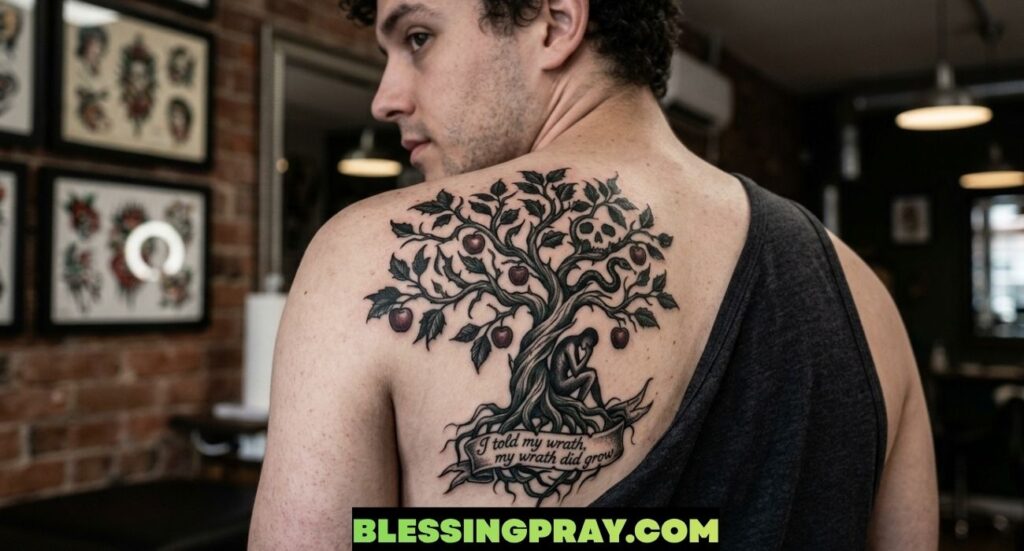
A minimalist poison tree tattoo distills the complex, heavy symbolism into its purest, most essential lines, proving that immense meaning requires no grand scale. These small, delicate designs speak in a quiet, confident whisper, hiding a universe of wrath and resilience in a single, elegant, and easily concealed stroke of ink.
- A single, uninterrupted contour line forming a tree with a tiny, solid black apple, a secret kept on a wrist or ankle.
- A fine-line, open-circle fruit bearing a single seed, worn behind the ear as a private, almost-hidden warning to oneself.
- A tiny, matchstick-sized tree with a root system shaped like a clenched fist, placed subtly on the inner finger.
- A delicate, geometric triangle tree made of negative space, its upside-down roots forming a heart on the upper ribcage.
- A whisper-thin, botanical line drawing of a single, poisonous hemlock branch tied with a small, wilted ribbon.
- A minimal constellation design, where tiny dots and lines connect to form a poison apple on the side of the wrist.
- A micro-realistic, single water droplet of “sap” falling from an unseen leaf, tattooed on the knuckle or earlobe.
- A simple, unshaded crescent moon whose pointed tips drip into a tiny, skeletal tree, fitting perfectly on the nape of the neck.
- A fine-line, open book outline with a single tree growing from the spine, a literary tribute no bigger than a coin.
- A minimalist ankle bracelet design, a fine black line that circles the ankle with a single, tiny poison berry as its clasp.
- A subtle, stick-and-poke style serpent coiled around a vertical line, an abstract poison tree for the inner bicep.
- A single-needle, scientific diagram of a strychnine molecule, its structure subtly twisted into the shape of a tiny tree.
- A minimalist, dashed-line “cut here” scissors mark at the base of a tiny, fine-line tree on the inside of the pinky finger.
Poison Tree Tattoo as a Symbol of Revenge and Justice
For some, the poison tree tattoo is not a cautionary tale but a cold, controlled declaration of a personal justice system. It can represent the quiet, patient cultivation of karma, a visual promise that a wrong will not be forgotten, and that the final, bitter harvest belongs to the one who planted the original seed of betrayal.
- A patient, silent oath that while your face shows forgiveness, the root system of your memory holds every single detail.
- A visual representation of the adage “the best revenge is a life well-lived,” where your thriving is the poison to your enemy.
- A tree with fruit bearing the faces of those who wronged you, a grim harvest where each will taste their own medicine.
- A symbol of karmic law, the absolute cosmic certainty that what one sows, they shall inevitably and bitterly reap.
- An emblem for a lawyer or advocate, a permanent reminder of their duty to be a poisonous force against true injustice.
- A cold, elegant alternative to a vengeful quote, letting the tree’s silent, patient growth speak the unspeakable threat.
- A design incorporating balanced scales hanging from a branch, tipping the weight of justice with a single poisoned fruit.
- A memorial to a whistleblower’s journey, where exposing the truth meant being cast out but ultimately poisoning a corrupt system.
- A personal crest for a survivor who refused to stay silent, their testimony becoming the poison that felled their abuser’s reputation.
- A tree growing from a shattered gavel, representing a profound disappointment in a legal system that failed to deliver justice.
- A symbol of generational revenge, a promise that the poison of a family’s misdeeds will be felt for seven generations.
- A quiet, meditative symbol for methodically dismantling an enemy’s world not with action, but with unnerving, strategic patience.
- A visual mantra of the long game, a reminder that a poison tree takes years to grow, but its shade lasts for an eternity.
See Also : 333 Beautiful Friday Morning Wishes to Brighten Every Heart This Weekend
Combining a Poison Tree Tattoo with Other Elements
The narrative power of a poison tree tattoo multiplies exponentially when woven with complementary symbols that add layers of personal myth. A serpent, a clock, or a raven doesn’t just decorate the tree; it becomes a crucial character in the story, shifting the meaning from a simple grudge to a complex tale of temptation, time, and omen.
- A serpent coiled around the trunk, doubling down on the Edenic theme of deception, temptation, and the original poison of the world.
- A clock with its hands frozen at the hour of a specific betrayal, the tree’s roots entwining the gears and stopping time itself.
- A raven perched on a dead branch, the Norse psychopomp adding an omen of death, lost memory, and piercing intelligence.
- An anatomical heart with the tree growing directly from the aorta, the physical and spiritual poison pumping through every artery.
- A shattered mirror, each fragmented shard reflecting a different branch, asking the bearer which version of themselves is truly the poisoner.
- A dagger buried deep in the trunk, representing the exact moment of a wound that festered and grew into this towering monument.
- A wolf howling beneath a poisonous moon, framing the poison not as malice but as a deeply wild, untamed, and loyal grief.
- A lit match or a lighter held to a root, introducing the active human agency of choice to burn the whole thing to the ground.
- A phoenix rising from the tree’s crown, capturing the exact moment of alchemical transformation from poisonous death to fiery rebirth.
- An all-seeing eye hidden in the bark, a symbol of hyper-vigilance born from the trauma of a poison that was planted in secret.
- A labyrinth pattern woven into the roots, representing the confusing, maddening psychological journey of gaslighting and betrayal.
- A crown of thorns resting on the tree’s highest branch, turning the poison into a Christlike narrative of suffering for others’ sins.
- A hummingbird drinking nectar from a toxic flower, the beautiful paradox of finding sustenance and even sweetness in a history of poison.
Celebrity Influence on the Poison Tree Tattoo Trend
While still a deeply niche and underground choice, the poison tree tattoo meaning has flickered through music, film, and celebrity culture, giving the symbol a broader aesthetic language. Artists who channel themes of melancholy, hidden pain, and poetic darkness have made the motif a whisper in the pop culture consciousness, influencing its visual evolution.
- The enduring visual legacy of William Blake’s own illuminated prints, making him the original poetic celebrity endorser of the image.
- Musicians in the emo and gothic folk revival scenes, whose lyrical themes of secret pain find a visual home in the poison tree.
- A specific album cover art cycle using twisted, toxic botanicals, inspiring fans to permanently wear their favorite sonic poison.
- Actors known for playing iconic villains or morally grey anti-heroes, whose characters embody the seductive danger of the poison fruit.
- The subtle influence of horror auteurs like Guillermo del Toro and Ari Aster, whose visual language of beautiful dread inspires ink.
- A rumored, never-confirmed tiny poison apple tattoo on an A-list singer, sparking endless fan theories and replication requests.
- The cottage-goth and dark academia social media aesthetics, where the poison tree is a perfect visual shorthand for intellectual melancholy.
- A director’s commentary on a psychological thriller where the poison tree is a direct set-design symbol, noticed and inked by keen-eyed fans.
- The literary podcast host whose full back piece is a poison tree, a permanent visual brand of their exploration of dark human stories.
- A fashion line’s one-season-only print of deadly botanicals, which turned from a runway concept to a permanent scarification trend.
- A famous poet’s Instagram post of their own poison tree tattoo, captioned with a new, devastating line about inherited wrath.
- The anonymous street artist who stenciled poison trees in major cities, a viral act of public art that migrated from walls to skin.
- A cult-classic video game character with a poison tree skill tree, whose character design becomes a stealthy, niche gamer tattoo.
The Tattoo Process: Pain, Healing, and Aftercare for a Poison Tree Design
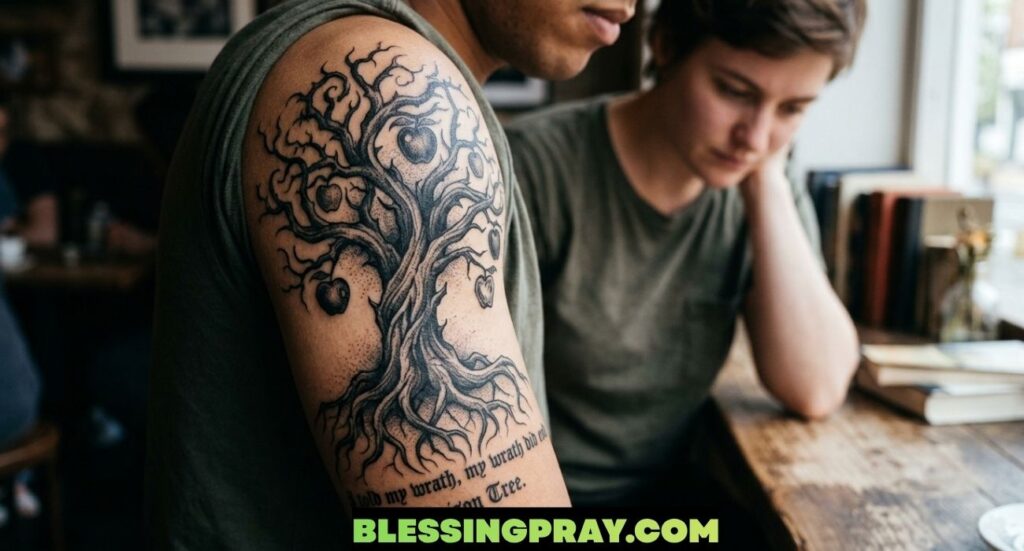
The physical journey of getting a poison tree tattoo is deeply metaphorical, a ritualistic process where the body endures a controlled poison to create permanent art. Understanding the technical pain, the healing stages, and the specific aftercare for its intricate details ensures your symbol of hidden wrath heals into a crisp, lasting testament rather than a blurred ghost.
- The initial outline feels like a cat scratch with a hot needle, a cleansing sting that mimics the first sharp bite of acknowledging your anger.
- Heavy blackwork shading for deep roots brings a dull, vibrating burn, the sensation of the poison’s slow, spreading warmth.
- The sternum, ribs, and spine placements are the most intense, reflecting that facing your core poison is the most painful part.
- Intricate dot-work and stippling feel like a tiny, repetitive bee sting, a meditative, rhythmic pain that builds the image layer by layer.
- The “poison peak” of pain hits around hour three, when endorphins crash and the body screams to stop, testing your commitment to the symbol.
- A healing poison tree goes through an “ugly phase” of peeling and clouding, mirroring the messy, non-linear process of emotional recovery.
- Using a medical-grade, fragrance-free balm is the physical act of not “watering” your wound with irritating, cheap, scented products.
- The itching stage is a test of restraint; scratching could blur the fine lines of your leaves, just as reacting impulsively blurs a personal boundary.
- Protecting it from the sun is paramount, as UV rays are the slow, silent poison that will fade a black tree into a greenish, sickly ghost.
- A poor heal on a poison apple can make it look bruised, a literal mark of a memory that still hasn’t processed correctly.
- The moment you remove the second-skin bandage and see the settled ink is the moment of “telling your wrath,” finally facing it healed.
- Tiny blowouts in delicate root work can look like the poison is seeping unintended, a reminder that anger has collateral damage.
- A fully healed, crisp poison tree is a testament to discipline; you endured a controlled poison and mastered it into a permanent, beautiful form.
FAQs
What does the poison tree symbolize?
A poison tree symbolizes hidden anger, pain, betrayal, and personal struggles. It also represents growth, healing, and emotional strength.
What does a poison tattoo mean?
A poison tattoo often represents danger, mystery, inner battles, and overcoming negative experiences in life.
What does A Poison Tree tattoo mean on a woman?
A Poison Tree tattoo on a woman can show strength, independence, emotional healing, and her journey through difficult times.
What is the spiritual meaning of the poison tree?
Spiritually, the poison tree represents transformation, self-awareness, and learning from pain to find peace and wisdom.
Conclusion
The Poison Tree Tattoo Meaning shows deep feelings, personal growth, and important life lessons. Many people choose this tattoo because it represents strength, change, and the journey of overcoming difficult times. The tree design can remind a person to stay strong and learn from past experiences. It carries a special message about emotions, healing, and hope.
A poison tree tattoo also allows people to express their stories in a creative way. Its dark yet beautiful look makes it meaningful and unique. The Poison Tree Tattoo Meaning can be different for each person, depending on their memories and beliefs. This tattoo remains a powerful symbol of personal strength, inner growth, and the beauty of life changes.